Influencer Pricing in Tech: What LinkedIn, Instagram, and YouTube Creators Actually Charge
After paying hundreds of B2B creators, here is what brands are actually paying on all channels.
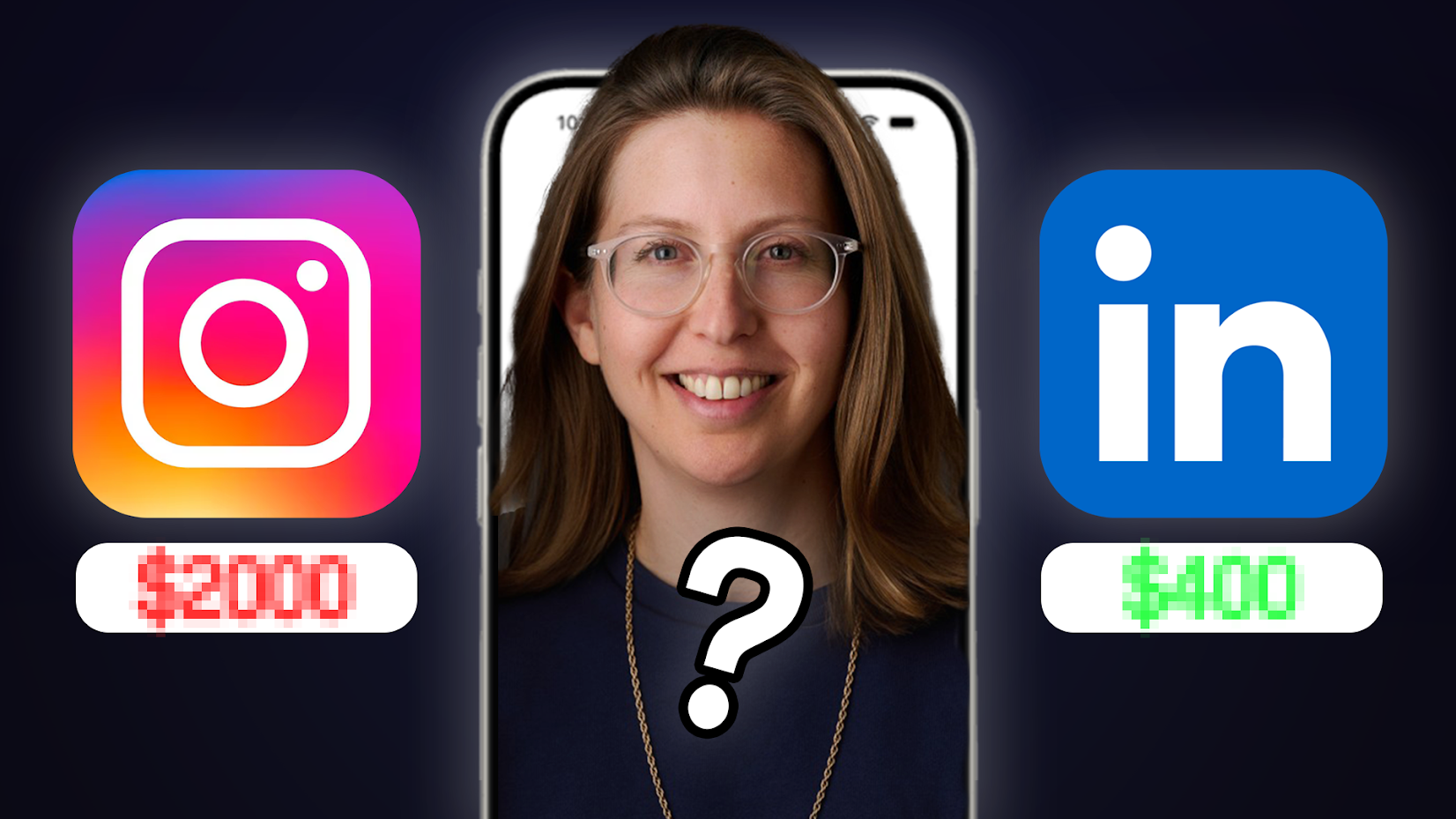
Quick answer: There's no fixed price list for tech influencers. Pricing varies wildly by platform, niche, and content quality - but as a rough starting point, LinkedIn tech posts often land around $1,000 a post, YouTube dedicated tech/SaaS videos average around $10,000 with some going far higher, and Instagram/short-form tech content can run anywhere from $1000 to $6,000+ per video depending on the creator. The only real way to price it is with your own benchmarks, using cost-per-view (CPV) or cost-per-thousand-impressions (CPM) to compare offers apples to apples.
Okay, let's get into it, because I know this is the question everyone asks me first: how much do influencers actually cost?
I wish I had a magic formula. I don't. Pricing in this space is a wild, wild west, and I say that after years of running influencer campaigns in house at a leading tech company. It's the trickiest budget I've ever had to plan compared to any other marketing channel, and unfortunately, there's no formula that all brands or agencies have agreed on. Influencers are different from each other - different size, style, reach, engagement - so why should they all charge the same thing? They don't.
So instead of fighting that chaos, this post is about how to work with it.
Why tech influencer pricing is so unpredictable
Pricing varies from niche to niche, and even within the same niche, it varies from influencer to influencer. It depends on the type of content, how many deliverables are in the agreement (the more you ask for, the less you'll usually pay per asset), the creator's experience level, and whether they have an agent. More experienced influencers, and definitely those with agents, will charge noticeably more - exclusivity alone can add 50% to 100% on top of the base price.
Geography matters too. If you're working with creators in different countries, pricing can shift considerably by region, so keep that in mind when you're setting benchmarks.
And here's the thing that trips people up most: pricing has almost nothing to do with quality or fit. A number an influencer gives you is just a number. It's not justified by anything in particular. That's why you can't price a campaign by asking "what should this cost" in the abstract - you have to build your own benchmarks from real data.
Platform-by-platform: what tech creators are charging
LinkedIn is a professional platform - people are posting about their profession, not their hobbies or family - which actually makes bios and profile quality more important here than almost anywhere else when you're vetting a creator.
On pricing specifically: for B2B / tech / SaaS campaigns, a common benchmark is around $1,000-$2,000 a post. If you want them to create a video, that could cost more. But LinkedIn is also one of the platforms where pricing tends to run high in general, and the algorithm can feel unpredictable, which is why some tech brands focus LinkedIn influencer activity around specific moments - like product launches - rather than always-on activity.
One frustrating thing about LinkedIn specifically: impression data isn't visible to brands, so you can't build a clean CPM out of it the way you can on other platforms. That means for LinkedIn, looking at average engagements and reading the comments, seeing if your ICP is engaging, often tells you more than the follower count or price alone.
Instagram tends to be one of the stronger-performing platforms for tech and dev-focused content, and pricing here is more spread out - small creators (nano-influencers) might charge as little as $500-$1,500 for a reel, while more established creators charge into the thousands. Deliverables often bundle organic content with an option to "boost" the post as a paid ad afterward, and that boosting budget is usually planned separately from the flat fee paid to the creator. Usage rights also vary like crazy and can be 20%-50% of the flat fee, and of course limited by time.
Minimum performance benchmarks matter more than price alone here. A common bar for tech content is a min average of 10K+ views per reel (looking at the creator's past 8 videos or so), alongside minimums like 300+ likes and 50+ comments per post - otherwise the reach isn't there to justify the spend.
YouTube
YouTube is generally the most expensive platform for tech influencer content, and also usually the highest-commitment format - a dedicated YouTube video is a bigger production than a quick Instagram reel, so it costs more and many times only gets one shot rather than three or four deliverables.
Benchmark numbers to anchor on: average pricing around $10,000 for a dedicated YouTube video, with average views around 60K for that price point in a tech/SaaS niche. On the lower end, smaller or more niche tech YouTubers can run closer to $1,000–$5,000 a video. On the high end, some tech YouTube creators charge $20,000–$40,000+ per video, which is where a lot of brands start pulling budget toward smaller creators instead, because the return doesn't always scale with the price.
YouTube has taken on extra importance recently for tech and SaaS brands specifically because of how LLMs pull from YouTube content - a YouTuber that is being cited is now treated as a signal of a good YouTuber to collaborate with, not just their view count.
The two metrics that actually make pricing usable: CPM and CPV
Once you're collecting price offers from creators, you need a way to compare them that isn't just "this one asked for less." That's where CPM and CPV come in.
- CPM (cost per thousand impressions): the classic benchmark, useful because it lets you compare influencer spend to other paid channels your team already understands.
- CPV (cost per view): take the cost of the video and divide it by the average views the creator gets. This is often preferred internally for tech and SaaS campaigns because it's a cleaner comparison between creators of very different sizes.
Here's how it works in practice: you get a price offer, you find out the creator's average views, and you calculate the CPV. Then you check that number against your range - is it within your benchmark, above it, or below it? That tells you whether to just say yes, negotiate, or walk away. Ideally, you want to see your average CPV decreasing over time as a sign that your team is getting better at negotiating and finding value.
Your CPV benchmarks should be based on your past campaigns - looking at how much you paid for the content and how many views you received.
How to actually build a tech influencer budget
Think of your budget like a puzzle, or a game of Tetris. You know your total budget going in - say $20K or $100K - but you don't know how many deals that turns into until the pieces start coming together. Some creators will be cheaper than expected, some more expensive, and you can't control who responds to your outreach first.
A practical way to set your very first benchmarks if you have zero data: reach out to 20–30 influencers in your niche, ask them all for their pricing and examples of past brand campaigns, and use those numbers to build your first range. It costs nothing but time.
Two ways to work a budget once you have benchmarks:
Starting from budget → working out reach. If you have $20K and your LinkedIn benchmark is $1,000 a post, you can plan for roughly 20 posts (or fewer creators doing multiple posts each).
Starting from a KPI → reverse-engineering budget. If your goal is 60 conversions and your YouTube benchmark is $10K a video with 60K average views, and every 10K views gets you one conversion, you can work backward to figure out you'd need around 10 videos - and therefore what budget to request.
A tactical tip on the negotiation itself: ask for pricing before you share your budget, in most cases. If you lead with your number, that's usually exactly what you'll get quoted back - even if the real market rate is lower. The exception is when you genuinely have a tight, non-negotiable budget; in that case, saying it upfront saves everyone's time.
A few other pricing factors that catch people off guard
- Usage rights and exclusivity change the price a lot. Paying to use a creator's content as an ad (rather than just letting it live organically on their page) typically adds roughly 20–50% of the asset's base cost, sometimes for as little as a 30-day usage window. Exclusivity - asking a creator not to work with competitors - can push the price up to 100% of the asset cost or more, usually for a period of 6 months to a year. Always flag these needs before asking for pricing, since they directly affect the number a creator gives you.
- Boosting budgets are separate from creator fees. A common starting point if you don't know where else to begin: allocate roughly 30% of your existing paid spend on a platform toward boosting influencer content, then adjust based on results.
- Package deals lower the per-video cost. Committing to more deliverables with one creator (say, 5–6 videos instead of 1) generally brings the per-video price down.
- Pricing tools that show "estimated" creator rates aren't reliable. Third-party rate estimators tend to run unrealistically low compared to what creators actually charge — don't build your benchmark off them.
FAQ: Tech influencer pricing
How much does a LinkedIn influencer post cost in tech/B2B? A common benchmark is around $1,000-$2,000 per post, though this varies by creator experience, niche, and whether boosting or usage rights are involved. Need them to create a video? This may cost more.
How much does a YouTube tech influencer video cost? Dedicated tech/SaaS YouTube videos average around $10,000, with smaller niche creators starting closer to $1,000–$5,000 and top-tier tech YouTubers reaching $20,000+ per video.
Should I use CPM or CPV to compare influencer pricing? Either works - CPM (cost per thousand impressions) is easier to compare against other paid channels, while CPV (cost per view) is often preferred for tech and SaaS campaigns because it more cleanly compares creators of different sizes. Pick one and build consistent benchmarks with it.
Do usage rights and exclusivity really affect influencer pricing that much? Yes. Usage rights (using organic content as a paid ad) typically add 20–50% to the base cost. Exclusivity can add up to 100% or more, usually for a fixed time window like 6-12 months.
Should I tell an influencer my budget before asking for their price? Generally no - ask for their pricing first, then negotiate against your benchmarks. Only lead with your budget if it's genuinely fixed and low, so you don't waste anyone's time.
About the author
Sarah Adam is Head of Partnerships, Social & AI at Wix, where she leads a team of 20 talented individuals across Social Media, Growth & Brand Partnerships, Influencer Marketing, UGC, Partner Marketing, Podcast Partnerships, and AI adoption for Wix's 150+ person marketing organization.She built Wix's influencer marketing program from the ground up - scaling it from zero to 500+ creator partnerships and 2,000+ annual content assets across five markets - and has since helped shape how one of the world's leading SaaS companies adopts AI across marketing.
More articles